


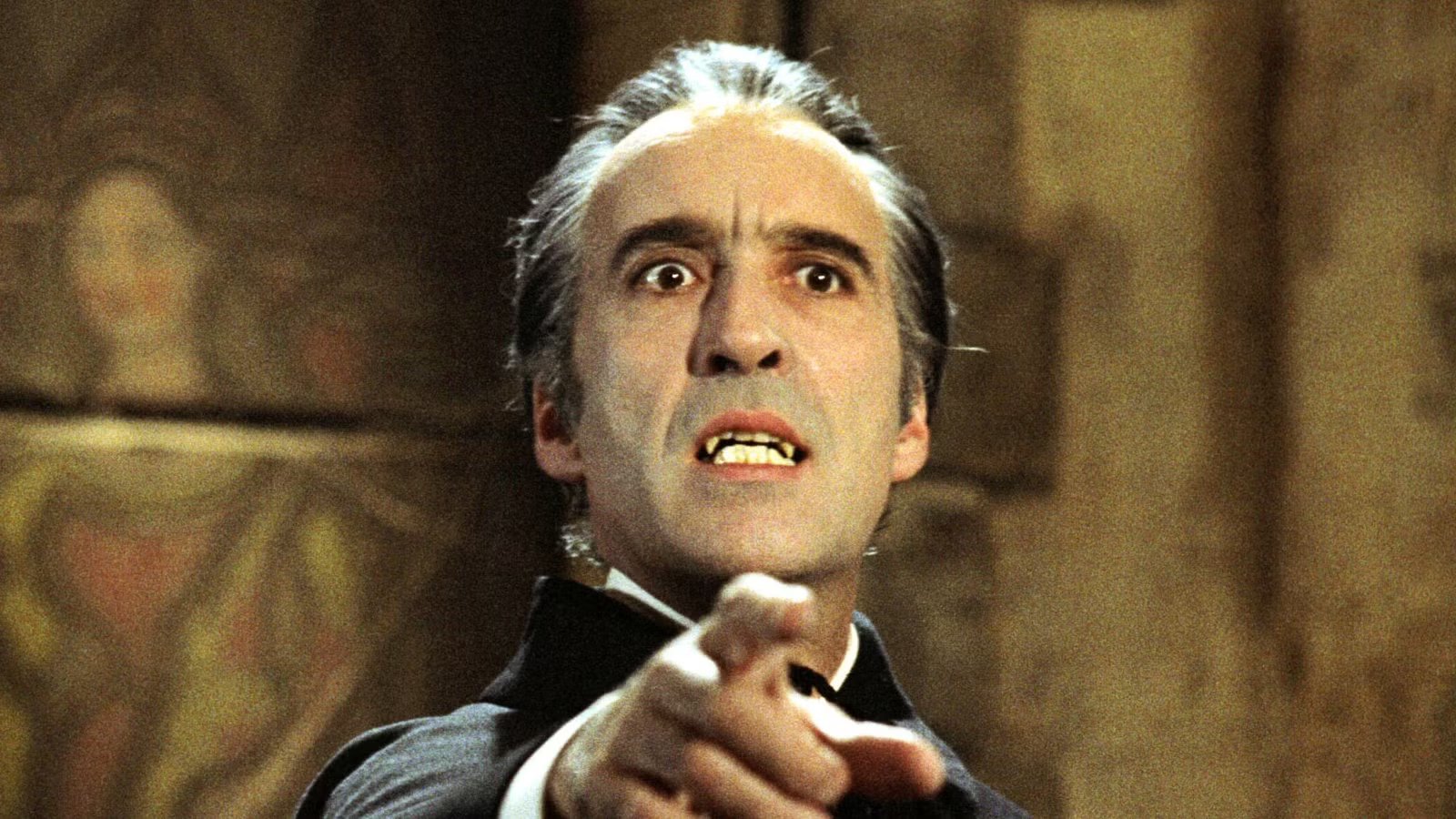
Before 1958, Dracula was synonymous with the legendary Bela Lugosi, whose theatrical and mesmerizing performance shrouded the character in shadow and mystery. Years later, when Christopher Lee first donned the cape of Count Dracula in 1958, it marked a turning point in how the character was portrayed in the horror genre. Lee’s execution in Horror of Dracula was a violent departure from past portrayals.
By the time Lee took over as Dracula, the Count was a well-established figure in pop culture. There’s no doubt that Universal and Bela Lugosi himself were largely influential, but in the post-war era, the theatrical style had begun to fade for audiences. Lee took the character away from his aristocratic roots, presenting Dracula as more animalistic and threatening. Lee’s Dracula remains a reference point for modern adaptations.
Dracula Needed to Sharpen His Fangs by the Late 1950s
Bela Lugosi smiling in DraculaImage via Universal Pictures
The Universal Monsters era of horror defined the genre for a generation and laid the framework for the films fans enjoy today. However, by the late 1940s, the horror icons of the era were losing their edge when faced with post-war audiences looking for either hard-boiled storytelling reflective of the times or comedy films for escapism. The rise of noir and comedies was the death knell for the iconic Universal monster machine.
The studio itself was aware of this cultural shift, leading to a wave of classic monsters appearing in comedy crossovers, such as the iconic Abbott and Costello Meet Frankenstein. While one aspect of the film that led to its success was treating the monsters with the proper respect and not as punchlines, it also served as a symbolic white flag for the old guard of universal horror. The classic version of Dracula had officially become dated.
The Hammer Horror revolution is the mid-to-late 1950s resurrection of the Count, starting with Christopher Lee’s Horror of Dracula. From a simple visual perspective, portrayals of the past were presented in black-and-white. Director Terence Fisher and Christopher Lee brought the terror to life in full Technicolor. For the first time, audiences could see the red blood dripping from Dracula’s fangs.
Beyond the colors, Lee’s Dracula movies were much less theatrical and monologue-heavy. He famously had 16 lines of dialogue in Horror of Dracula. In the opening of the film, he may seem familiar with previous performances, but that is thrown out of the window before the first act ends. He’s brutal and violent, especially for a 1958 audience who grew up on the aristocratic depictions of Lugosi and Carradine.
Lee wore red contact lenses that showed Dracula’s more monstrous transformation when the bloodlust took over him. Horror of Dracula also popularized the use of fangs in Dracula films. There were other films of the same time that used fangs, but it’s Lee’s film that is given credit by film historians as setting the industry standard due to its popularity. In minutes, Lee shifts from an inviting host to a feral killer.
Christopher Lee’s Dracula Legacy Looms Large Over the Genre
With the Horror of Dracula and his subsequent films portraying the Count, Christopher Lee simultaneously resurrected the iconic character while also rewriting the rules of how Dracula would function on-screen for decades to come. Over the decades, directors and actors first returned to Bram Stoker’s story to capture the essence of the original tale, but the visual choices still live in the shadow of Lee.
Francis Ford Coppola‘s Dracula was marketed as a return to the source material, but it can be argued that Gary Oldman’s performance is a bridge between Stoker’s novel and Lee’s visceral portrayal. The ultimate testament to Lee’s legacy as Dracula is that even decades later, his performance is inescapable. The majority of modern performances infused the Count with the same animalistic energy that Lee first conjured.
Release Date
May 22, 1958
Runtime
82 Minutes
Director
Terence Fisher
Writers
Jimmy Sangster
